

Table of Contents
- Why Long-Haul Flights Wreck Your Body (and How to Fight Back)
- Hydration Tips for Long Haul Flights: Electrolytes, Not Just Water
- Natural Jet Lag Remedies That Actually Work
- Non Habit Forming Sleep Aids for Restorative In-Flight Rest
- The Carry-On Wellness Kit: Travel Wellness Products for Long Haul Flights
- Circadian Rhythm Management: The Angle Most Travelers Miss
- Post-Flight Recovery Protocol: Land Ready to Perform
- Frequently Asked Questions
Last Updated: September 13, 2026
Why Long-Haul Flights Wreck Your Body (and How to Fight Back)
A long-haul flight is not a neutral gap between two places. It is a physiological event, and your body pays for it. At altitude, cabin air holds very little moisture, so you dehydrate faster than you would on the ground. You sit still for hours, blood pools in your legs, and your normal sleep-wake cues disappear the moment you cross three or more time zones.
That combination is why travelers land foggy, puffy, and running on empty. This guide from Reset Jet Lag breaks travel wellness products for long haul trips into a phase-based system: what to do before boarding, what to use in the air, and how to recover once you land. Below, we cover the carry-on kit, the jet lag remedies that hold up, and the circadian angle most packing lists skip entirely.

The core idea is simple. You are not buying a bag of gadgets. You are managing hydration, sleep timing, circulation, and gut comfort across roughly 24 hours.
Hydration Tips for Long Haul Flights: Electrolytes, Not Just Water
The best hydration strategy for a long-haul flight is electrolytes plus water, not water alone. Cabin humidity on long flights is famously low, and drinking plain water without replacing sodium and potassium can leave you running to the bathroom without ever feeling properly hydrated.
A practical routine looks like this:
- Drink water steadily through the flight instead of in one large amount
- Add an electrolyte stick pack once or twice on flights over eight hours
- Skip alcohol and limit caffeine, both of which push fluid loss
- Set a reminder every 90 minutes so you actually drink
This is where a targeted product beats generic advice. The Cleveland Clinic's guidance on dehydration explains why electrolyte balance matters more than volume alone. Reset Jet Lag's ReFuel Travel Recovery and Electrolyte Formula is built for exactly this window: a stick pack you mix into a bottle, sized for a carry-on.

Natural Jet Lag Remedies That Actually Work
The natural jet lag remedies that work best are the ones that reset your light exposure and sleep timing, not the ones that promise a shortcut. Light is the strongest signal your body clock responds to, so getting bright morning light at your destination matters more than any single supplement.
What actually helps:
- Get outdoor light in the morning at your destination
- Shift your sleep schedule by an hour or two a few days before departure
- Move your body during daylight hours to stay awake
- Eat on the local schedule, even if you are not hungry
What tends to disappoint is the "one pill fixes it" approach. A common mistake is taking a sleep aid at the wrong hour, which can deepen the mismatch instead of correcting it. The goal is to nudge your rhythm, not to knock yourself out.
Non Habit Forming Sleep Aids for Restorative In-Flight Rest
Non habit forming sleep aids are options that support rest without creating dependence or next-day grogginess. For in-flight rest, the priority is a short, controlled sleep window, not a full night's sleep at 35,000 feet.
The reason most sleep aids fail on a plane is timing, not potency. Your body clears oral melatonin in roughly four to five hours, and a standard immediate-release dose can peak while you are still mid-flight, leaving you groggy during descent and the first hours after landing. The fix is to match the delivery format to the length of the rest window you actually have.
Here is how the common formats compare for in-flight use:
| Format | Onset | Duration | Best For | Trade-off |
|---|---|---|---|---|
| Immediate-release oral | ~30-60 min | 4-5 hrs | Short rest windows under 5 hrs | Peak-and-crash grogginess |
| Extended-release oral | ~60 min | 6-8 hrs | Full overnight flights | Harder to time; can overshoot |
| Transdermal patch | Gradual | Steady over wear time | Flights where you want a low, even signal | Slower to feel; skin sensitivity |
| Non-ingestible (eye mask, earplugs, compression) | Immediate | As worn | Anyone avoiding supplements | No chemical effect |
Transdermal delivery is worth understanding because it changes the shape of the curve. Instead of a pill that hits all at once, a patch releases ingredients gradually through the skin, so you get a lower, steadier signal rather than a spike. Reset Jet Lag's Night Patch uses melatonin, magnesium, hops, and valerian root in a slow-release format, paired with a Day Patch built on B-complex vitamins, vitamin C, and vitamin E. The system is designed as a day-and-night protocol rather than a single dose.
A few practical rules that most packing lists skip:
- Apply the patch 30 to 60 minutes before your target sleep window, not at boarding.
- Aim to sleep during the hours that match your destination's night, even if that means sleeping at an odd hour for your body.
- Set an alarm for 60 to 90 minutes before landing so you wake into light, not into a fog.
- Skip alcohol as a sleep aid. It shortens time to sleep but fragments the second half of the night and worsens dehydration.
If you have tried melatonin and disliked the foggy feeling, the delivery method is often the reason. Gradual release is gentler than a spike. Anyone with sensitive skin, who is pregnant, or who takes medication should check with a clinician first, and that advice applies to any patch or supplement.
The Carry-On Wellness Kit: Travel Wellness Products for Long Haul Flights
A carry-on wellness kit is a small, TSA-compliant pouch of travel-sized items that covers hydration, sleep, hygiene, and skin care in one place. Build it once, refill it before each trip, and you stop repacking from scratch every time.
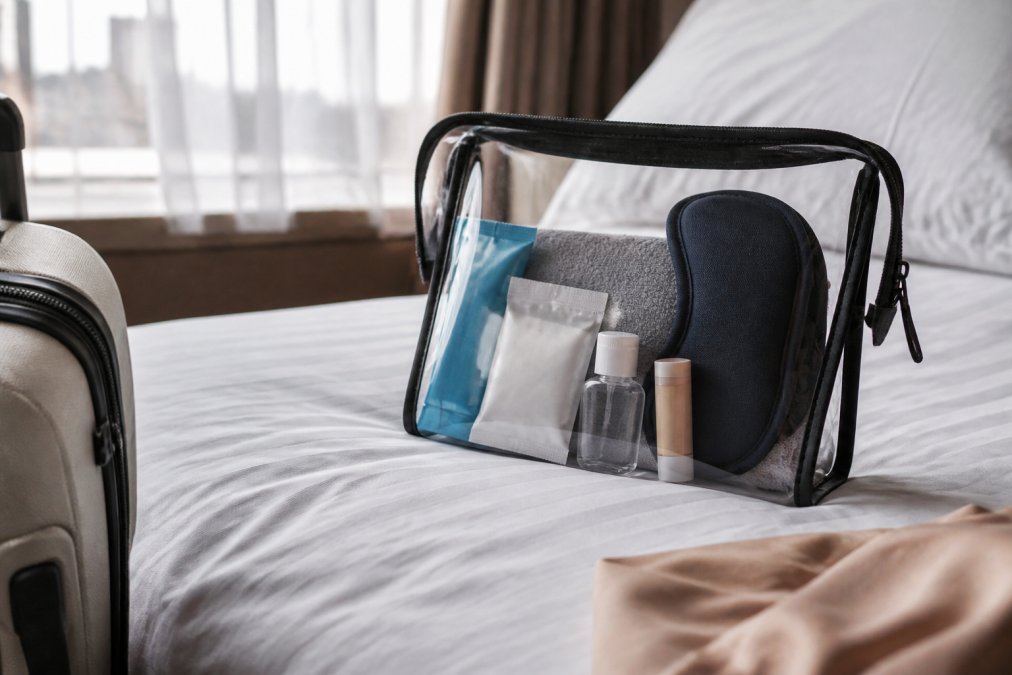
The angle most packing lists miss is format. The TSA liquids rule caps gels and liquids at 3.4 ounces per container inside a single quart-sized bag, which means every liquid you pack competes for the same small space. The workaround is to favor solid-state and dry formats, stick packs, powders, patches, bars, and sticks, that sidestep the liquid limit almost entirely and free up your quart bag for the few things that genuinely must be liquid.
Here is the framework that works, organized by what each item solves and which format keeps you compliant:
| Need | What to Pack | Format | Why It Helps |
|---|---|---|---|
| Hydration | Electrolyte stick packs | Powder | Replaces sodium and potassium, not just water; no liquid limit |
| Sleep timing | Day and Night patches | Transdermal | Gradual release, no pills or caffeine |
| Hygiene | Hand sanitizer, wipes | Gel + dry wipes | Cuts exposure in tight cabins |
| Skin | Lip balm, barrier cream | Stick + small tube | Counteracts dry cabin air; stick avoids the liquid bag |
| Comfort | Compression socks, eye mask | Textile | Supports circulation and rest |
| Energy | Protein bar, electrolyte chews | Solid | Keeps blood sugar steady when meal service is hours away |
The TSA's rules on liquids in carry-on bags matter here: keep gels and liquids in containers of 3.4 ounces or less inside a single quart-sized bag. Patch systems, stick packs, and solid bars sidestep that limit almost entirely, which is one reason they fit a carry-on so well.
A few sizing and packing specifics that make the kit actually usable:
- Keep the whole kit in one pouch no larger than a quart bag so it counts as your single liquids allowance if needed.
- Pack 1 electrolyte stick per 4 hours of flight; a 10-hour flight means 2 to 3 sticks.
- Carry one spare patch set in case a patch lifts or you extend your trip.
- Put the pouch in your personal item, not the overhead bin.
Circadian Rhythm Management: The Angle Most Travelers Miss
Circadian rhythm management is the practice of timing light, sleep, and meals to shift your internal clock toward your destination's schedule. It is the single highest-use thing you can do, and it is the one most packing lists ignore.
The mechanism is straightforward. Your body clock runs on cues, and light is the loudest one. Eastbound trips are harder for most people because you are asking your clock to move earlier, against its natural drift. Westbound trips are usually gentler.
A simple protocol:
- Before you fly, shift bedtime 30 to 60 minutes toward the destination
- On the plane, sleep during the hours that match your destination's night
- On arrival, get daylight in the morning and avoid bright light late in the evening
- Eat meals on the local clock from day one
Pairing this with a structured patch protocol gives your body a consistent signal across the whole trip rather than a single intervention.
Post-Flight Recovery Protocol: Land Ready to Perform
Landing ready to work comes down to a first-24-hours plan, not luck. The travelers who walk off a plane sharp are the ones who treated arrival as part of the trip, not the end of it.
Do this in order:
- Get outside into daylight within an hour of landing
- Hydrate with an electrolyte mix before your first coffee
- Take a short walk to restart circulation
- Eat a normal meal at the local time
- Go to bed at a reasonable local hour, even if you are not tired
The mistake is collapsing into a nap the moment you reach the hotel. A long daytime nap can lock in the wrong rhythm for days. If you must rest, keep it short.
Reset Jet Lag's patch system is designed around this full arc, from the flight through the first days on the ground, rather than a single moment. You can see the full protocol and product range on the CDC's travel health guidance on jet lag alongside your own clinician's advice.
Long-haul travel asks a lot of your body, and arriving depleted costs you the first days of any trip. Reset Jet Lag builds its transdermal patch system around that problem: a time-released Day and Night protocol, plant-based ingredients and vitamins, and no pills or caffeine, so your body can adjust to a new time zone without a habit-forming crutch. Add the ReFuel electrolyte mix to your carry-on and you cover hydration and rhythm in one kit. Get started with Reset Jet Lag and land ready to perform.
Frequently Asked Questions
What should be in a carry-on wellness kit for long haul flights?
Pack travel-sized essentials: electrolyte hydration mixes, a non habit forming sleep aid like a transdermal patch, hand sanitizer, moisturizer, lip balm, and a sleep mask. Include compression socks and a small pouch to keep items organized. For a 10-hour flight, bring two hydration stick packs and one day-night patch set. Keep all liquids TSA-compliant (3.4 oz or less) in a clear quart bag. This kit helps you stay hydrated, sleep better, and arrive feeling human.
Are transdermal patches effective for adjusting to new time zones?
Transdermal patches deliver ingredients like melatonin, magnesium, and B vitamins gradually through the skin. This steady release may help support your body's natural rhythm without the spike-and-crash of pills. Many travelers find them convenient and non habit forming. However, effectiveness varies by person. The key is to combine patch use with light exposure and meal timing at your destination.
How can I maintain my wellness routine during long haul travel?
Stick to a simple routine: hydrate every two hours with an electrolyte mix, move your body every 90 minutes, and use a non habit forming sleep aid to rest on the flight. Upon arrival, get sunlight, eat meals at local times, and take a short walk. Pack travel wellness products for long haul trips in advance so you're not scrambling. Consistency matters more than perfection. Even small habits like wearing compression socks and using a patch system can make a noticeable difference.
What are the most effective ways to combat jet lag naturally?
Natural jet lag remedies include timed light exposure, melatonin patches, hydration, and strategic napping. Before your trip, shift your sleep schedule by an hour per day. On the plane, drink water with electrolytes and avoid alcohol. At your destination, get morning sunlight to reset your circadian rhythm. A day-night transdermal patch system can support this process by delivering calming ingredients at night and energy-supporting vitamins during the day. These steps help reduce fatigue and improve focus.