

Table of Contents
- 1. Travel Health Tips for Long Flights: Hydrate, Move, and Protect Your Body
- 2. How to Prevent Jet Lag: Pre-Flight Planning and Day-Night Routines
- 3. Travel Health Kit Checklist: Over-the-Counter and Prescription Medications
- 4. Tips for Traveling with Kids Internationally: Age-Specific Needs and Accessibility
- 5. Destination Research and Travel Insurance: Access to Care Abroad
- 6. Food and Water Safety at Your Destination: What to Eat and Drink
- 7. Sleep, Rest, and Managing Travel Stress for Recovery
- Frequently Asked Questions
Last Updated: October 13, 2026
1. Travel Health Tips for Long Flights: Hydrate, Move, and Protect Your Body
The 10 best travel health tips for in 2026 start with what happens at 35,000 feet. Cabin air is dry, and you sit for hours. That combo drains your body.
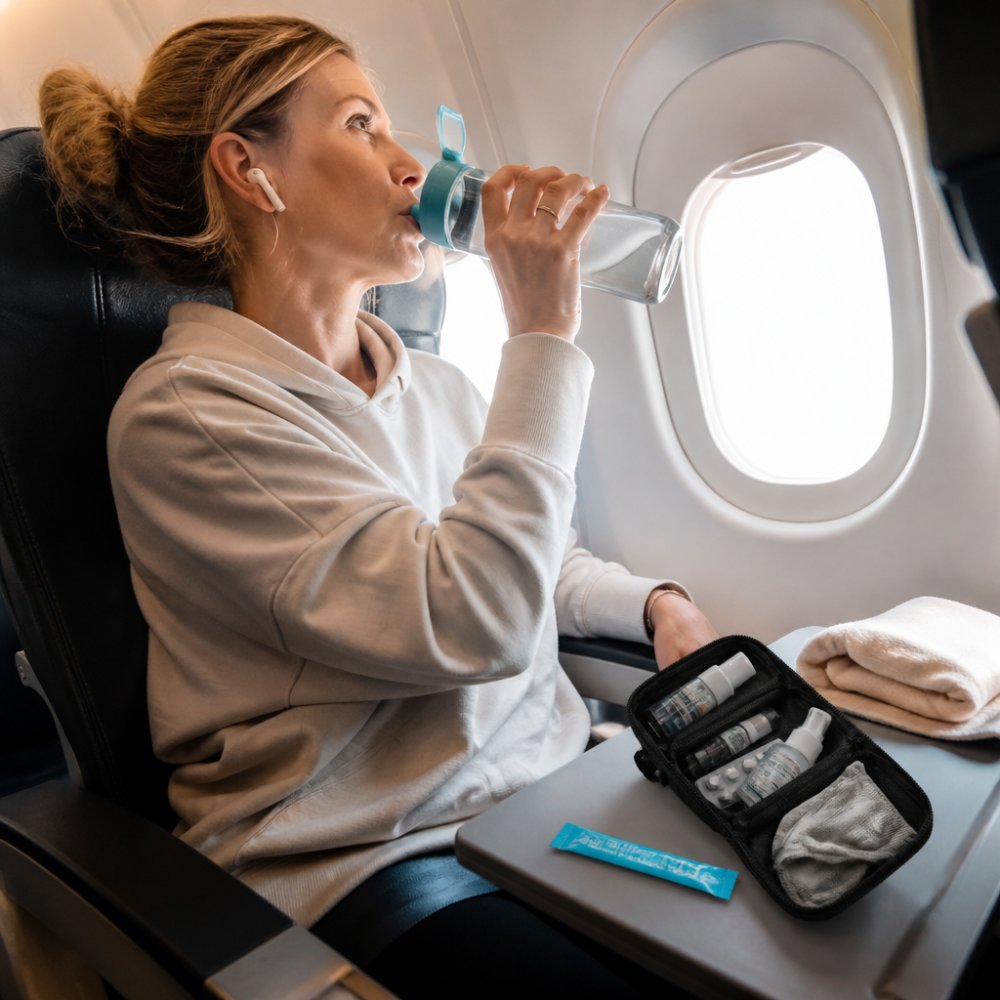
Travel health is the practice of protecting your physical and mental well-being before, during, and after a trip. It covers hydration, movement, sleep, food safety, and planning ahead.
Most travelers focus only on packing. That's a mistake.
(/products/refuel-travel-recovery-and-electrolyte-formula) mixes into 16-20 oz of cold water and helps replace fluids lost during travel.Movement and Stretching to Prevent Blood Clots
Sitting still for hours slows your circulation. Stand up every hour or two.
Try these in your seat:
- Ankle circles, 10 each direction
- Knee lifts, 10 per leg
- Shoulder rolls, slow and steady
- A short walk to the back of the cabin
The CDC guidance on travel and blood clots recommends moving your legs during long trips, especially if you have circulation risks.
2. How to Prevent Jet Lag: Pre-Flight Planning and Day-Night Routines
Jet lag happens when your internal clock, the suprachiasmatic nucleus in your brain, is still running on home time while your destination is already on a different schedule. Your clock responds to three main signals: light, meals, and activity. The fix is to move those signals before you board, not after you land.

Pre-Travel Medical Planning for Jet Lag
Start shifting two to three days before departure.
- Eastbound (you lose time): go to bed 30-60 minutes earlier each night and wake 30-60 minutes earlier. Morning light is your friend; evening light is your enemy.
- Westbound (you gain time): push bedtime 30-60 minutes later and seek bright light in the evening. Morning light will fight you, so wear sunglasses on the way to the airport.
- Set your watch to destination time the moment you sit down on the plane. Eat, sleep, and nap on that schedule, even if it feels wrong.
If you take prescription sleep medication, talk to your clinician before the trip about how it interacts with time-zone shifts. Do not start a new sleep aid for the first time on a flight.
In-Flight Protocol: Light, Meals, and Movement
A common pattern that works for most travelers:
- First hour in the air: drink 8-12 oz of water, set your watch, and decide when you will sleep based on destination time.
- Mid-flight: if it is nighttime at your destination, sleep. If it is daytime there, stay awake, read, or work in dim light.
- Last 90 minutes: drink water, eat a light protein-forward snack, and avoid caffeine unless it is morning at your destination.
- On descent: open the window shade. Light on your face at the right local time is the single strongest signal you can send your clock.
Jet Lag, Motion Sickness, and Blood-Clot Prevention
These three problems share one plan: hydrate, move, and control light.
- Motion sickness: if you are prone to it, take motion sickness medication 30-60 minutes before boarding, not after symptoms start. Choose a seat over the wing or in the front of the cabin, and aim your air vent at your face. Ginger chews help some travelers; they are not a substitute for medication if you get severely ill.
- Blood clots: sitting still for four or more hours slows circulation in your legs. Stand and walk every 1-2 hours, do ankle circles and knee lifts in your seat, and stay hydrated. If you have a history of clots, recent surgery, or a clotting disorder, ask your clinician before a long flight whether compression stockings or other precautions are right for you.
- Light exposure: get 20-30 minutes of outdoor morning sun on your first full day at the destination. Avoid bright screens late at night for the first two evenings.
3. Travel Health Kit Checklist: Over-the-Counter and Prescription Medications
A travel health kit is a small pouch of medicines and supplies you carry on every trip. Build it once, restock it as needed.
What to Pack in a Travel Health Kit
- Pain reliever and fever reducer
- Antidiarrheal and antacid
- Motion sickness tablets
- Antihistamine for allergies
Keep prescriptions in your carry-on, never checked bags. Carry a written list of your medications and doses.
4. Tips for Traveling with Kids Internationally: Age-Specific Needs and Accessibility
Children adjust to new time zones faster than adults, but they crash harder too. Plan around their sleep.
Book flights that land in the late afternoon or early evening. Let kids stay awake until local bedtime. Skip the long nap on arrival day.
Pack snacks, a water bottle, and a comfort item in your carry-on. For accessibility needs, call your airline ahead of time.
5. Destination Research and Travel Insurance: Access to Care Abroad
Most travel health articles stop at 'buy insurance.' That is the easy part. The hard part is knowing what your policy actually covers, where you would go if something went wrong, and how to verify current guidance before you leave. This section covers all three.
Pre-Travel Medical Planning: When to See a Clinician
Book a pre-travel visit four to six weeks before departure if you are going anywhere with specific vaccine or medication requirements. Some vaccines need multiple doses spaced weeks apart, and some antimalarial medications must be started before you arrive.
ReFuel Travel Recovery and Electrolyte Formula →
Bring these to the visit:
- Your full itinerary, including rural or remote stops
- A list of your current medications and doses
- Your vaccination history
- Any chronic conditions, allergies, or pregnancy status
A clinician can tell you which routine vaccines you may need boosters for, whether destination-specific vaccines are recommended, and whether you need prescriptions to carry with you, such as antimalarials or antibiotics for traveler's diarrhea.
Verifying Current Guidance for 2026
Health recommendations change. An outbreak, a new entry requirement, or a vaccine shortage can shift guidance between the time you book and the time you fly.
- Check the CDC Travelers' Health destination pages for country-specific vaccine, outbreak, and food-and-water guidance. These pages are updated as conditions change.
- Check the U.S. Department of State travel advisories for safety and security information by country.
- Re-check both within two weeks of departure, and again the week you leave if your destination has an active outbreak.
- If you take a medication that is controlled or restricted in your destination, verify the rules before you travel. Some countries require a letter from your prescriber or limit the quantity you can bring.
How to Evaluate Travel Insurance
Not all policies are equal. Read the exclusions page before you buy, not after you need it.
- Medical coverage: does the policy pay for treatment abroad, and up to what limit? Look for a medical limit high enough to cover a hospital stay in your destination.
- Medical evacuation: this is the line item most travelers ignore. A medical evacuation can cost tens of thousands of dollars out of pocket. Confirm the policy covers evacuation to a facility capable of treating you, not just the nearest hospital.
- Pre-existing conditions: many policies exclude them unless you buy within a set window after your first trip payment. If you have a chronic condition, this matters.
- Adventure activities: scuba diving, skiing, and some hiking routes are excluded by default. Add a rider if your trip includes them.
- Trip cancellation and interruption: check what qualifies. 'Cancel for any reason' upgrades usually reimburse a percentage, not the full trip.
Locating Care Abroad
Before you leave, save these to your phone and a paper copy:
- The address and phone number of the nearest hospital or clinic to each stop on your itinerary
- Your insurance company's 24-hour assistance number
- The local emergency number for each country you visit
- The U.S. embassy or consulate contact information for each country, which can help in a serious emergency
If you have a chronic condition, ask your clinician for a brief summary of your diagnosis and current treatment in English, and carry it with your prescriptions.
6. Food and Water Safety at Your Destination: What to Eat and Drink
Food and water safety rules vary by region. When in doubt, follow local advice.
- Drink bottled or boiled water where tap water isn't safe
- Avoid ice made from tap water
- Eat food that's cooked and served hot
- Skip raw produce you can't peel or wash
- Use hand sanitizer before meals
These habits prevent most stomach trouble on the road.
7. Sleep, Rest, and Managing Travel Stress for Recovery
Recovery is part of travel health, not a bonus. Build rest into your schedule.
Get outside in daylight on arrival day. Take a short walk. Drink water.
For sleep support, the Reset Jet Lag Travel Patch System uses a Day and Night protocol.
Breathing exercises and meditation also calm travel stress. Five slow breaths before takeoff can settle your nerves.
Frequently Asked Questions
What should I pack in a travel health kit?
A travel health kit checklist should include over-the-counter medication like pain relievers, antihistamines, and motion sickness tablets, plus prescription medication in original containers, hand sanitizer, disinfecting wipes, sunscreen, insect repellent, and electrolyte stick packs such as ReFuel. Add a copy of your emergency contact information and travel insurance details. For international trips, include any medical devices and a doctor's letter for prescriptions.
How can I prevent jet lag on a long flight?
To prevent jet lag, shift your sleep schedule a few days before departure, stay hydrated, and limit caffeine and alcohol. On the plane, move and stretch every couple of hours. After landing, get daylight exposure at your destination and follow a consistent day-and-night routine. A transdermal patch system like Reset Jet Lag delivers B-complex vitamins, Vitamin C, and Vitamin E during the day and melatonin, magnesium, hops, and valerian root at night to support your body's natural rhythm without pills or caffeine.
How much water should I drink while traveling?
Aim for at least 8 ounces of water every hour during a long flight, or about 1 cup per hour. Dry cabin air and altitude increase fluid loss, so drink more than you would on the ground. Use a reusable water bottle and refill after security. Adding an electrolyte mix like ReFuel to 16-20 ounces of cold water helps replenish fluids lost during travel and supports hydration, circulation, and digestion.
How can families keep kids healthy while traveling internationally?
For tips for traveling with kids internationally, pack a dedicated travel health kit for children with child-sized doses of over-the-counter medication, hand sanitizer, and disinfecting wipes. Schedule flights around their sleep routines, bring healthy snacks and a water bottle, and encourage hand hygiene in crowded places. For jet lag, plan a light first day with outdoor time to help reset their body clock.
Long trips test your body in ways a normal week never does. The travelers who feel best on arrival are the ones who plan ahead. At Reset Jet Lag, our patch system and ReFuel hydration mix are built for exactly this: helping your body adjust faster so you keep your energy and focus. Shop the Reset Jet Lag patch system and ReFuel formula to start your next trip ready.