

Table of Contents
- How Transdermal Patches and Oral Sleep Pills Compare at a Glance
- How Transdermal Patches Work: Skin Absorption and the Dermal Barrier
- Bioavailability of Oral vs Transdermal Supplements: First-Pass Metabolism Compared
- Half-Life, Controlled-Release Delivery, and Dosage Consistency
- Pros and Cons: Sleep Patches vs Oral Sleep Aids
- Jet Lag Sleep Solutions: Matching the Delivery Method to Your Travel Schedule
- Safety, Skin Sensitivity, and Drug Interactions to Know Before You Choose
- Cost Per Dose and Environmental Impact: The Factors Most Comparisons Skip
- Frequently Asked Questions
Last Updated: September 28, 2026
How Transdermal Patches and Oral Sleep Pills Compare at a Glance
Transdermal patches vs oral sleep pills is a delivery-method question, not just a product question. Transdermal patches deliver ingredients through the skin over several hours, while oral sleep pills release their dose all at once through the stomach. This guide from Reset Jet Lag breaks down how each method works, what it costs, and which one fits your travel schedule.

| Factor | Transdermal Patches | Oral Sleep Pills |
|---|---|---|
| Delivery route | Through the skin into systemic circulation | Through the stomach and liver |
| Dose pattern | Sustained-release over hours | Single dose, peaks then declines |
| First-pass metabolism | Avoided | Significant |
| Onset | Gradual | Faster |
| Best for | Overnight travel, time zone shifts | Falling asleep at home |
| Habit-forming risk | Non-habit forming formulas exist | Varies by ingredient |
How Transdermal Patches Work: Skin Absorption and the Dermal Barrier
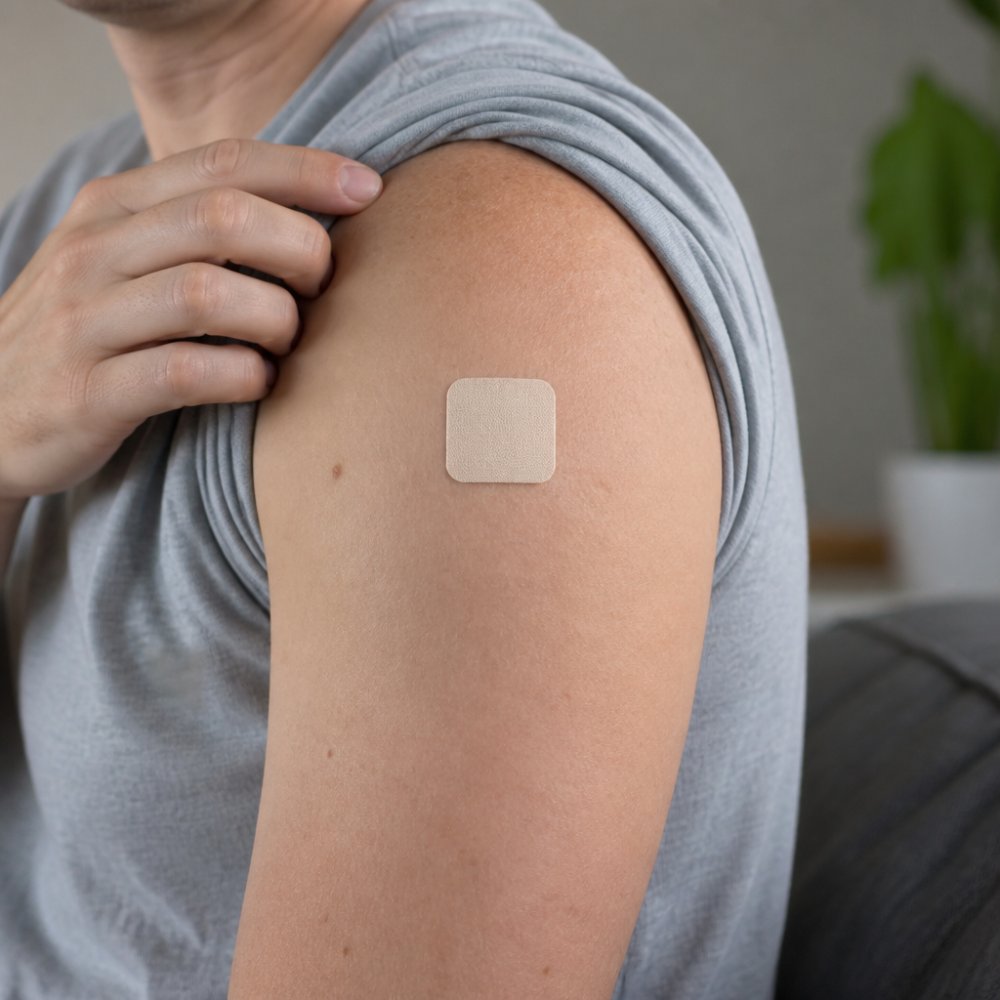
A transdermal patch works by holding active ingredients against the skin so they pass through the dermal barrier and into systemic circulation. Absorption is gradual, which is why patches suit overnight wear better than a quick pre-flight dose.
The Dermal Barrier and Topical Absorption Rates
Topical absorption rates vary by body site, skin temperature, and how clean the skin is before application. A patch applied to dry, lotion-free skin adheres better and delivers more consistently. Oily or freshly moisturized skin is the most common reason a patch underperforms.
Bioavailability of Oral vs Transdermal Supplements: First-Pass Metabolism Compared
The bioavailability of oral vs transdermal supplements differs mainly because of first-pass metabolism. Pills pass through the liver before reaching the bloodstream, which breaks down part of the dose. Patches bypass that step entirely.
Gastrointestinal Absorption and Metabolic Breakdown
Gastrointestinal absorption depends on what you ate, how your gut is functioning, and timing. Metabolic breakdown then trims the dose further. On a long-haul flight, with disrupted meals and dehydration, both variables shift. A delivery route that skips the gut removes two things you cannot control mid-flight.
Half-Life, Controlled-Release Delivery, and Dosage Consistency
Half-life is the time it takes your body to clear half of a given dose. It is the single number that predicts whether a sleep ingredient will still be working at 3 a.m. or will have already faded. Short half-life ingredients clear fast, which is exactly why controlled-release delivery matters for sleep support.
- Fast-release oral: onset in roughly 20 to 60 minutes, a sharp peak, then a decline that often tracks the ingredient's half-life. A compound with a 1 to 2 hour half-life is largely gone within a few hours, which is the classic "woke up at 3 a.m." pattern.
- Sustained-release oral: a slower rise and a longer window, but the release still depends on the gut emptying at a predictable rate. Eat a late meal or get dehydrated on a flight and the curve shifts.
- Transdermal patch: a gradual rise as the ingredient crosses the dermal barrier, then a plateau while the patch holds a steady concentration gradient against the skin. Remove the patch and the reservoir stops refilling, so the decline is usually gentler than a pill's cliff.
Why the Flat Curve Matters for Sleep Maintenance
Sleep has two separate problems, and they need opposite curves. Sleep onset latency is the time it takes to fall asleep, and it rewards a faster rise. Sleep maintenance is staying asleep through the night, and it rewards a flat, sustained curve. A single fast-release pill optimizes the first and sacrifices the second. A controlled-release patch trades a slower onset for a longer, steadier window.
What "Controlled-Release" Actually Means
Controlled-release is not one technology. Matrix patches hold the ingredient in a polymer layer that releases it as the skin absorbs it. Reservoir patches hold a liquid or gel dose behind a rate-controlling membrane that meters the flow. Both aim for the same result: a release rate that does not depend on how fast your stomach empties or what you ate.
Pros and Cons: Sleep Patches vs Oral Sleep Aids
Sleep patches suit travelers who want a steady overnight dose without swallowing anything. Oral sleep aids suit people who need to fall asleep quickly at home. Neither wins everywhere.
Transdermal patches
- Pros: sustained-release delivery, no first-pass metabolism, no pills or caffeine, discreet under clothing
- Cons: slower onset, requires clean dry skin, adhesion depends on application
Oral sleep pills
- Pros: fast onset, widely available, easy to dose
- Cons: peak-and-decline curve, gut-dependent absorption, some ingredients carry dependency concerns
Apply the patch at least an hour before you want the effect to build. Travelers who slap one on in the boarding line and expect instant results are the ones who report it "didn't work."
Jet Lag Sleep Solutions: Matching the Delivery Method to Your Travel Schedule
Jet lag sleep solutions work best when the delivery method matches the direction and length of your flight. Eastbound trips compress your day, so sleep support matters more on the first two nights. Westbound trips stretch it, so daytime energy support matters more.
Reset Jet Lag Travel Patch System - 1 →
Safety, Skin Sensitivity, and Drug Interactions to Know Before You Choose
Skin sensitivity is the factor most comparisons skip, and it is the one that ends patch use fastest. Contact dermatitis, an allergic or irritant reaction to the adhesive or the active ingredient, is the most common reason people abandon transdermal products. It usually shows up as redness, itching, or a raised rash under the patch, and it can develop after several days of trouble-free use rather than on the first application.
How to Test a Patch Before You Rely on It
Do a patch test before a trip, not during one. Apply a patch to your inner forearm, leave it on for a full day, and check the site after removal. If the skin is red, itchy, or blistered, that formula is not for you. A common pattern is that irritation appears at the edges of the adhesive rather than the center, which points to the adhesive rather than the active ingredient.
Rotating Application Sites
Applying a patch to the same spot night after night is the fastest way to irritate the skin. Rotate sites, and give each site several days to recover before you use it again. Good sites are dry, relatively hairless, and not subject to friction from clothing or a seatbelt. The upper arm, shoulder blade, and upper back are common choices.
Topical Medication and Skincare Interactions
This is the interaction category almost no comparison covers. If you apply a prescription cream, a topical steroid, or even a heavy moisturizer to the same area, the two products compete for the same skin surface and the same absorption pathway. A moisturizer can change how well a patch adheres and how fast the ingredient crosses the barrier.
When to Skip Patches Entirely
Do not apply a patch to broken, sunburned, freshly shaved, or freshly waxed skin. Adhesion fails, absorption becomes unpredictable, and irritation is far more likely. People with a history of eczema, psoriasis, or known adhesive allergies should be cautious and test first.
Ingredient-Level Cautions
Anyone pregnant, nursing, or taking prescription medication should check with a healthcare provider before using melatonin or valerian root. Melatonin can interact with blood thinners, immunosuppressants, and some blood pressure medications, and valerian can compound the effects of sedatives. The FDA consumer guidance on dietary supplements explains why supplement ingredients are not reviewed for safety before sale the way drugs are, which is why the burden of checking interactions falls on you.
Cost Per Dose and Environmental Impact: The Factors Most Comparisons Skip
Cost per dose is the honest way to compare these two methods. A bottle of oral sleep aid looks cheaper at the shelf, but the per-night math depends on how many nights you actually travel.
- Count your travel nights for the next 6 months
- Divide pack price by nights covered
- Compare against your current oral aid's per-night cost
- Factor in waste from unused pills
Frequently Asked Questions
Are sleep patches better than pills for absorption?
Transdermal patches deliver ingredients through the skin directly into systemic circulation, bypassing first-pass metabolism in the liver. Oral pills pass through the digestive tract first, where a portion of the active ingredients is broken down before reaching the bloodstream. This difference means a transdermal vitamin patch can provide more consistent dosage over its wear time, while oral sleep aids tend to peak and fade. The better option depends on whether you need sustained delivery through the night or a faster onset.
How long does a transdermal patch last, and how many do I need per trip?
The Reset Jet Lag patch system uses a day-and-night protocol. Each patch is worn for up to 8 hours, then removed. A 1-pack contains 12 patches (6 Day + 6 Night) for $21.99, covering roughly six days of travel. The 2-pack has 24 patches for $39.58, and the 3-pack has 36 patches for $56.07. For a typical international trip lasting four to seven days, one or two packs is usually enough.
Do sleep patches work for chronic insomnia or just jet lag?
Transdermal patches for sleep are designed around circadian rhythm support, not clinical insomnia treatment. The night patch formulation includes melatonin, magnesium, hops, and valerian root, ingredients associated with sleep onset and sleep maintenance during time-zone shifts. Chronic insomnia typically requires evaluation by a healthcare provider. For travel-related sleep disruption, patches offer a non-habit-forming option that supports the body's natural rhythm without the grogginess some oral sleep aids cause.
I have sensitive skin and take medications. Are there interactions I should worry about?
The Reset Jet Lag patches use medical-grade, hypoallergenic adhesive and a breathable backing to reduce irritation risk. That said, if you have known adhesive allergies, dermatological conditions, or take prescription medications (especially hormone therapy, sedatives, or blood thinners), check with your doctor before using any transdermal patch. Topical medications applied near the patch site can also compete for absorption. Skin should be clean, dry, and free of lotions or oils before application for best adhesion and to reduce irritation.
What is the real cost per dose compared to oral sleep pills?
At $21.99 for 12 patches, the Reset Jet Lag system costs about $1.83 per patch. A night of sleep support typically uses one night patch, so the cost per night is roughly $1.83. Over-the-counter oral sleep aids vary widely, but many cost $0.50 to $2.00 per dose. The transdermal option sits in a similar range while offering controlled-release delivery and no first-pass metabolism. For frequent travelers, the 3-pack at $56.07 brings the per-patch cost down to about $1.56.